





Enhancing Agricultural Efficiency: The Role of Rotary Drum Agglomerators in Food Processing
Release time:
Dec 05,2025
Rotary drum agglomerators are vital equipment in the agricultural food processing sector, designed to enhance the efficiency of material handling and product formation. These machines operate by utilizing a rotating drum to combine fine particles or powders into larger, more manageable agglomerates. This process not only improves the flowability of materials but also helps in achieving uniform siz
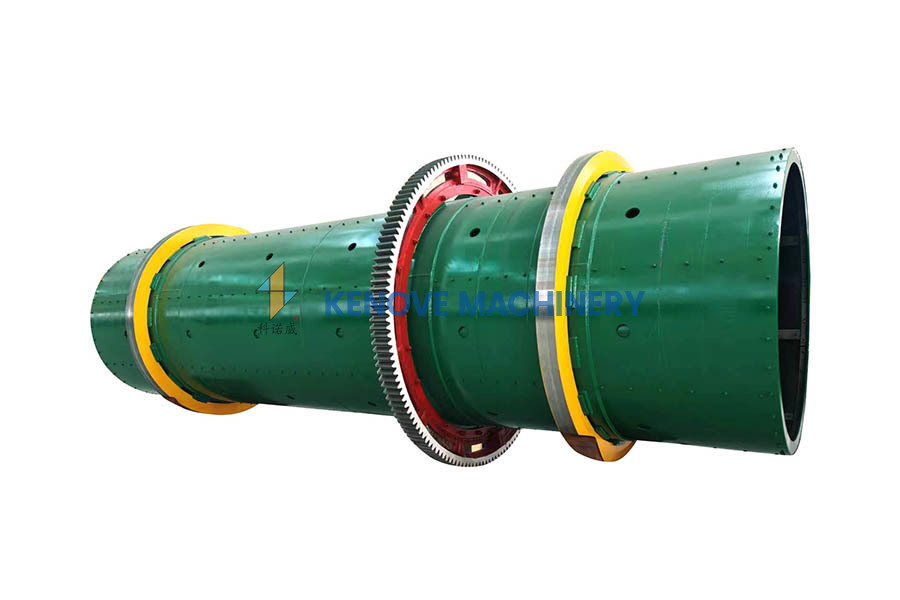
Rotary drum agglomerators are vital equipment in the agricultural food processing sector, designed to enhance the efficiency of material handling and product formation. These machines operate by utilizing a rotating drum to combine fine particles or powders into larger, more manageable agglomerates. This process not only improves the flowability of materials but also helps in achieving uniform sizes, which is crucial for subsequent processing stages.
In the context of agricultural machinery, rotary drum agglomerators serve multiple purposes. One of their primary functions is to facilitate the production of granules from powdered materials. This is particularly beneficial in sectors where consistency is key, such as in fertilizer production or feed manufacturing. By creating larger granules, these machines ensure that the materials are easier to handle, transport, and apply, which ultimately leads to enhanced operational efficiency.
Another significant advantage of using rotary drum agglomerators is their ability to improve the physical properties of processed materials. The agglomeration process can increase bulk density, reduce dustiness, and minimize segregation during storage or transportation. As a result, agricultural products become more stable and easier to manage throughout their lifecycle. This is especially important in the food processing industry, where product integrity and quality are paramount.
Moreover, rotary drum agglomerators are versatile machines that can be utilized for a wide range of materials, including organic and inorganic substances. This adaptability makes them an excellent choice for agricultural applications, where the nature of the raw materials can vary widely. For example, they can effectively agglomerate agricultural by-products, such as husks and seeds, into usable forms that can be integrated back into production processes or used as animal feed.
The operation of a rotary drum agglomerator typically involves the introduction of a binding agent during the agglomeration process. This binding agent can be a liquid or a fine powder, which helps to adhere the particles together, forming larger aggregates. The design of the rotary drum also allows for precise control over the agglomeration conditions, such as rotation speed, residence time, and moisture content, ensuring optimal results tailored to specific material characteristics.
In conclusion, rotary drum agglomerators play a crucial role in the agricultural and food processing industries by enhancing the efficiency and quality of material handling and product formation. Their ability to create uniform, stable agglomerates makes them indispensable for modern agricultural machinery, helping to streamline operations and improve the overall productivity of agricultural processes. As these technologies continue to evolve, they will undoubtedly play an even more significant role in optimizing the agricultural landscape.
In the context of agricultural machinery, rotary drum agglomerators serve multiple purposes. One of their primary functions is to facilitate the production of granules from powdered materials. This is particularly beneficial in sectors where consistency is key, such as in fertilizer production or feed manufacturing. By creating larger granules, these machines ensure that the materials are easier to handle, transport, and apply, which ultimately leads to enhanced operational efficiency.
Another significant advantage of using rotary drum agglomerators is their ability to improve the physical properties of processed materials. The agglomeration process can increase bulk density, reduce dustiness, and minimize segregation during storage or transportation. As a result, agricultural products become more stable and easier to manage throughout their lifecycle. This is especially important in the food processing industry, where product integrity and quality are paramount.
Moreover, rotary drum agglomerators are versatile machines that can be utilized for a wide range of materials, including organic and inorganic substances. This adaptability makes them an excellent choice for agricultural applications, where the nature of the raw materials can vary widely. For example, they can effectively agglomerate agricultural by-products, such as husks and seeds, into usable forms that can be integrated back into production processes or used as animal feed.
The operation of a rotary drum agglomerator typically involves the introduction of a binding agent during the agglomeration process. This binding agent can be a liquid or a fine powder, which helps to adhere the particles together, forming larger aggregates. The design of the rotary drum also allows for precise control over the agglomeration conditions, such as rotation speed, residence time, and moisture content, ensuring optimal results tailored to specific material characteristics.
In conclusion, rotary drum agglomerators play a crucial role in the agricultural and food processing industries by enhancing the efficiency and quality of material handling and product formation. Their ability to create uniform, stable agglomerates makes them indispensable for modern agricultural machinery, helping to streamline operations and improve the overall productivity of agricultural processes. As these technologies continue to evolve, they will undoubtedly play an even more significant role in optimizing the agricultural landscape.
Contact Us
Intersection of Yinhua Road And Fengshan Road,Pingyi County, Linyi City,Shandong,China
