





Understanding the Role of Rotary Drum Agglomerators in Agricultural Machinery
Release time:
Oct 16,2025
Rotary drum agglomerators play a pivotal role in the agricultural machinery sector, particularly within the realm of food production. These devices are designed to improve the process of particle agglomeration, a crucial step in the manufacturing of various agricultural products. By utilizing a rotating drum combined with an appropriate binder, these machines facilitate the clumping of fine powder
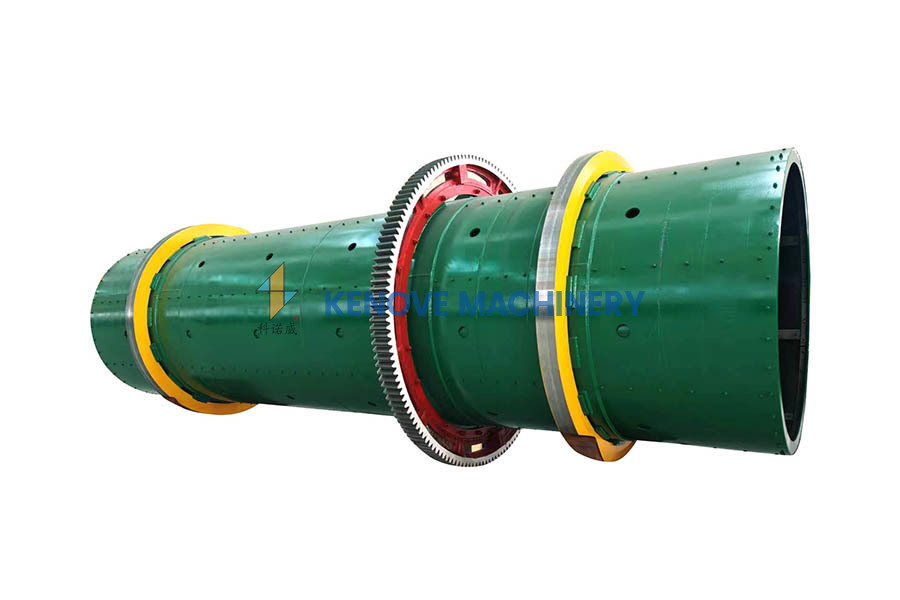
Rotary drum agglomerators play a pivotal role in the agricultural machinery sector, particularly within the realm of food production. These devices are designed to improve the process of particle agglomeration, a crucial step in the manufacturing of various agricultural products. By utilizing a rotating drum combined with an appropriate binder, these machines facilitate the clumping of fine powders into larger, more manageable granules. This transformation is essential for several reasons.
Firstly, the agglomeration process enhances the flowability of powders, which is particularly beneficial when dealing with fertilizers, animal feeds, and other agricultural substances. Improved flowability means that these materials can be handled more efficiently, reducing dust generation and minimizing waste during transport and application. Farmers and producers can achieve better distribution of nutrients and ingredients, leading to more effective crop yields and livestock health.
In addition to improving handling, rotary drum agglomerators contribute to the consistency and uniformity of the product. By ensuring that particles are of a similar size and shape, these machines help maintain quality standards in agricultural products. This uniformity is vital, as it can influence the rates of dissolution or nutrient release in fertilizers, ultimately affecting their effectiveness.
Moreover, rotary drum agglomerators enable the incorporation of additives and nutrients into the agglomerated product. This capability allows for the development of specialized formulations tailored to specific agricultural needs. For instance, a producer might create a slow-release fertilizer that delivers nutrients over an extended period, enhancing soil health and reducing the need for frequent applications.
Another advantage of rotary drum agglomerators is their versatility. They can process a wide range of materials, making them suitable for various agricultural applications beyond traditional food production. From creating feed pellets to producing composted materials, these machines are adaptable to numerous agricultural processes.
In terms of maintenance and operation, rotary drum agglomerators are generally designed for durability and efficiency. Regular maintenance can ensure that the machinery operates at optimal performance, minimizing downtime and maximizing productivity.
In conclusion, the role of rotary drum agglomerators in agriculture cannot be understated. Their ability to enhance product flow, create uniformity, and facilitate the incorporation of additives makes them indispensable in the agricultural machinery landscape. As the industry continues to evolve, understanding the benefits of these machines will be crucial for producers aiming to optimize their operations and improve overall agricultural efficiency.
Firstly, the agglomeration process enhances the flowability of powders, which is particularly beneficial when dealing with fertilizers, animal feeds, and other agricultural substances. Improved flowability means that these materials can be handled more efficiently, reducing dust generation and minimizing waste during transport and application. Farmers and producers can achieve better distribution of nutrients and ingredients, leading to more effective crop yields and livestock health.
In addition to improving handling, rotary drum agglomerators contribute to the consistency and uniformity of the product. By ensuring that particles are of a similar size and shape, these machines help maintain quality standards in agricultural products. This uniformity is vital, as it can influence the rates of dissolution or nutrient release in fertilizers, ultimately affecting their effectiveness.
Moreover, rotary drum agglomerators enable the incorporation of additives and nutrients into the agglomerated product. This capability allows for the development of specialized formulations tailored to specific agricultural needs. For instance, a producer might create a slow-release fertilizer that delivers nutrients over an extended period, enhancing soil health and reducing the need for frequent applications.
Another advantage of rotary drum agglomerators is their versatility. They can process a wide range of materials, making them suitable for various agricultural applications beyond traditional food production. From creating feed pellets to producing composted materials, these machines are adaptable to numerous agricultural processes.
In terms of maintenance and operation, rotary drum agglomerators are generally designed for durability and efficiency. Regular maintenance can ensure that the machinery operates at optimal performance, minimizing downtime and maximizing productivity.
In conclusion, the role of rotary drum agglomerators in agriculture cannot be understated. Their ability to enhance product flow, create uniformity, and facilitate the incorporation of additives makes them indispensable in the agricultural machinery landscape. As the industry continues to evolve, understanding the benefits of these machines will be crucial for producers aiming to optimize their operations and improve overall agricultural efficiency.
Contact Us
Intersection of Yinhua Road And Fengshan Road,Pingyi County, Linyi City,Shandong,China
